10 TPD Batch Pyrolysis Plant Solutions for the Waste Management Industry

A 10 TPD batch pyrolysis plant is a waste-to-resource system that thermally decomposes organic-containing waste under high-temperature, oxygen-free or oxygen-limited conditions. Instead of direct burning, the pyrolysis process converts suitable waste materials into pyrolysis oil, recovered carbon black, combustible gas.

For waste management companies, tire recyclers, plastic recycling plants, oil sludge treatment contractors and industrial waste processors, Yushunxin can design a 10 TPD batch pyrolysis solution according to the waste source, raw material condition, site layout and local environmental requirements.

Batch type_waste recycling pyrolysis plant

What Raw Materials Can  10 TPD Batch Pyrolysis Plant Process?

Yushunxin 10 TPD batch pyrolysis equipment can process different forms of pyrolyzable waste, including whole tires, cut tires, tire blocks, tire chips, rubber scraps, sorted plastics, selected mixed plastic waste, aluminum-plastic composite waste, oil sludge and oily waste. When your raw material size, shape, moisture level or supply condition is not fully standardized, the batch pyrolysis process gives you more flexibility in feeding, heating and batch-by-batch operation.

Whole tires and large tire pieces are common choices when a project wants to reduce early pretreatment investment. A batch-type reactor does not require all materials to be crushed into very small and uniform particles before feeding. With a suitable feeding design, the system can handle larger tire materials and help customers simplify the first-stage project setup.

Tire chips, rubber scraps and conveyor belt waste are more suitable when customers already have shredding or cutting equipment. These materials usually improve reactor loading density and heating uniformity. Their oil recovery depends on rubber content, fabric content, filler level and impurity condition, so Yushunxin will evaluate both the expected oil yield and the final solid product handling before recommending the configuration.

Sorted PE, PP and PS plastics usually have better oil recovery potential and smoother operation. Selected mixed plastic waste can also be evaluated when it contains enough hydrocarbon-based polymers. However, if the plastic stream contains high PVC, PET, moisture, soil, multilayer packaging or heavy contamination, the project may need sorting, de-waxing design and stronger gas treatment before stable operation.

Oil sludge and oily waste are different from dry solid materials. Their value depends more on oil content, water content, sand content, viscosity and residue form. When the sludge contains more recoverable oil and fewer inorganic impurities, the recovery value is usually better. For high-moisture or high-viscosity materials, Yushunxin will focus more on sealed feeding, stable heating, residue discharge and exhaust gas treatment.

Aluminum-plastic composite waste, cable skin waste and plastic-rich industrial scraps should not be judged only by oil yield. These materials may contain aluminum layers, coatings, fillers, chlorine-containing components or inorganic residue. Before confirming the process route, Yushunxin will evaluate oil gas recovery, residue separation, pipeline anti-blockage design and downstream recycling value.

If your material is not listed above, you can send Yushunxin raw material photos, videos, daily supply volume, moisture condition and basic composition information. Our technical team will help you judge whether the material is suitable for pyrolysis, what products may be recovered, and which feeding, condensation, discharge and gas treatment configuration will better match your project.

Feedstock Form

Typical Materials

Project Evaluation Focus

Whole or Large-Size Materials

Whole tires, cut tires, tire blocks, conveyor belt waste

Feeding method, reactor loading, pretreatment cost

Shredded or Irregular Solids

Tire chips, rubber scraps, plastic scraps, cable skin waste

Material size, impurity level, oil recovery potential

Sorted Plastics

PE, PP, PS, selected ABS plastics

Oil yield, condensation efficiency, de-waxing requirement

Mixed or Composite Waste

Mixed plastics, aluminum-plastic waste, packaging scraps

Sorting need, chlorine risk, residue separation

Oil-Based Materials

Oil sludge, tank bottom sludge, oily waste

Oil content, moisture, viscosity, sealed feeding, residue discharge

Five Key Configurations in 10 TPD Batch Pyrolysis Plant

A suitable pyrolysis solution should match your material condition,Yushunxin usually discusses five key configurations with customers: feeding configuration, reactor heating, oil gas separation and condensation, solid discharge, and gas treatment. These sections determine operating efficiency, oil recovery, workshop cleanliness, safety control and long-term maintenance.

Because customers may have different processing capacities, raw material sizes, labor conditions and investment budgets, Yushunxin provides two feeding options: manual feeding and mechanical feeding. For whole tire projects with a controlled budget, manual feeding can reduce initial investment. For projects that require higher loading efficiency or lower labor intensity, Yushunxin can recommend tire cutting equipment, hydraulic feeding equipment or customized auxiliary feeding devices.

For customers who need stable thermal conversion, Yushunxin matches the reactor model and burner heating method according to the raw material type and target capacity. When the burner system heats the pyrolysis reactor to the required temperature, the organic materials are converted into oil gas, combustible gas and solid residue.

To improve pyrolysis oil recovery and reduce operation problems, Yushunxin designs the oil gas separation and condensation unit according to the material characteristics. Tire projects usually need stable oil gas cooling, while plastic projects may require a de-waxing design to reduce wax blockage. After separation and cooling, the condensable oil gas turns into liquid pyrolysis oil and enters the oil storage tank.

Based on customer requirements regarding the environmental friendliness of the workshop and the ease of residue disposal, Yushunxin can recommend suitable residue discharge methods: front discharge and rear discharge.

Depending on local emission standards, raw material risk level and fuel cost, Yushunxin designs the gas reuse and exhaust gas treatment configuration. Non-condensable combustible gas can be treated and returned to the burner system for reactor heating. Exhaust gas is discharged after treatment by a suitable purification system.

Complete Process Flow:

Waste recycling pyrolysis unit process

Why Choose a Batch Pyrolysis Plant for Waste Recycling?

Yushunxin batch pyrolysis equipment is designed for practical waste recycling projects that require flexible raw material handling, stable operation, safe gas control and project-based configuration.

For many new recycling projects, customers prefer to control the first-stage investment. Batch pyrolysis plant allows customers to start with one reactor and expand later according to raw material supply, product sales channels and site conditions. This staged investment model is suitable for customers who want to reduce project pressure at the beginning.

Batch pyrolysis equipment is more tolerant of large-sized or less uniform feedstock in many waste recycling projects. With different feeding configurations, it can process solid materials such as whole tires, rubber scraps, plastic scraps, solid sludge and liquid waste sludge. This flexibility is useful when the raw material size, shape or supply condition is not fully standardized.

Yushunxin can be equip with water seals, flame arresters, gas separators and micro negative pressure control. These safety configurations help control gas flow direction, reduce flashback risk and improve operation safety.

Batch pyrolysis equipment has a clear system structure, which makes daily operation, inspection and maintenance easier for operators.

Batch pyrolysis equipment has more flexible layout options for existing workshops, open yards or staged project planning. When you wish to increase the supply of raw materials, the project can be expanded by adding reactors or upgrading auxiliary equipment.

For customers who need to process different at different times, batch-type pyrolysis plant is practical choice. The operating conditions can be adjusted batch by batch according to material characteristics, such as waste tires, plastics, oil sludge or aluminum-plastic waste. For projects with stable, uniform feedstock and higher automation requirements, semi-continuous or continuous pyrolysis systems can also be evaluated according to the project scale.

Other Pyrolysis Plant Capacity and Customized Solutions

Besides the 10 TPD batch pyrolysis plant for waste recycling solution, Yushunxin also provides other batch pyrolysis reactor capacities, including 6 tons, 8 tons, 12 tons and 15 tons per batch. If your raw material supply, site area or investment plan does not match the 10-ton model, Yushunxin can help you compare different reactor capacities and recommend a more suitable pyrolysis configuration for your waste recycling project.

Model

YSX-B6

YSX-B8

YSX-B10

YSX-B12

YSX-B15

Capacity Per Batch

6 Tons

8 Tons

10 Tons

12 Tons

15 Tons

Reactor Material

Q345R / SS304 / SS310 / SS316

Q345R / SS304 / SS310 / SS316

Q345R / SS304 / SS310 / SS316

Q345R / SS304 / SS310 / SS316

Q345R / SS304 / SS310 / SS316

Heating Type

Direct Burner Heating

Direct Burner Heating

Direct Burner Heating

Direct Burner Heating

Direct Burner Heating

Fuel Type

LPG / Diesel / Natural Gas

LPG / Diesel / Natural Gas

LPG / Diesel / Natural Gas

LPG / Diesel / Natural Gas

LPG / Diesel / Natural Gas

Discharging Method

Front / Rear Optional

Front / Rear Optional

Front / Rear Optional

Front / Rear Optional

Front / Rear Optional

Working Temperature

450–520°C

450–520°C

450–520°C

450–520°C

450–520°C

Cooling Time

8–10 h

8–10 h

8–10 h

8–10 h

8–10 h

Working Cycle

20–24 h

20–24 h

20–24 h

20–24 h

20–24 h

Container Loading

2×40HQ

2×40HQ

1×40FR + 1×40HQ

1×40FR + 1×40HQ

1×40FR + 1×40HQ

Recommended Project Type

Small trial project, limited raw material supply, lower-budget investment

Small to medium waste tire or plastic recycling project

Medium-capacity commercial waste recycling project

Medium to large waste-to-fuel project with stable raw material supply

Larger-capacity project, higher daily processing target, future expansion plan

Land Requirement

300–500 m²

300–500 m²

300–500 m²

300–500 m²

300–500 m²

  • Smaller models are suitable for trial projects, limited waste supply or lower first-stage investment.
  • Larger models are more suitable for customers with stable raw material supply, larger site area and higher daily processing targets.
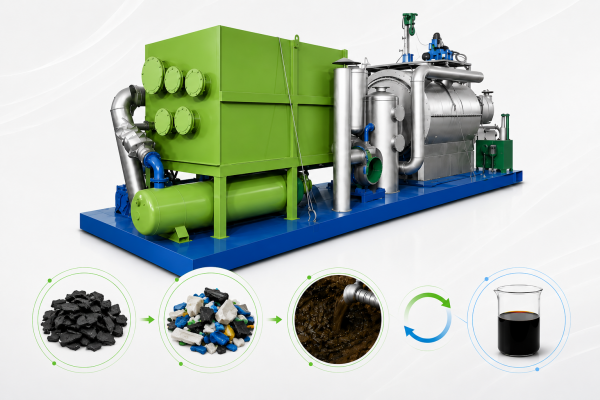
If you are planning to build a waste pyrolysis plant, please provide your raw material type, daily processing target, land area and environmental requirements through the form below. Yushunxin will help you select a suitable model and design a practical waste recycling solution.