Which Feedstock Fits Your Pyrolysis Project? Tire, Plastic, Oil Sludge and PV Panels Compared

A pyrolysis plant can process several carbon-based wastes, but each material needs a suitable feeding, heating, condensation and discharge route. Buyers should review feedstock composition, physical form, moisture, impurities, supply stability and target products.

Most commercial projects focus on waste tires and rubber, plastic waste, oil sludge and laminated solar panels. Yushunxin uses these factors to recommend batch, semi-continuous, continuous or customized thermal treatment systems.

Feedstock

Preferred Plant Type

Pretreatment

Main Control Concern

Target Products

Whole tires

Batch plant

Optional wire removal

Loading and cooling cycle

Oil, carbon black, steel, gas

Tire chips

Semi/fully continuous

Shredding and sizing

Stable sealed feeding

Oil, rCB, steel, gas

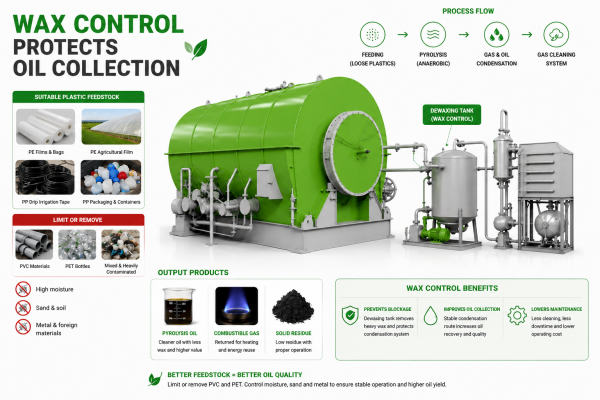
PE/PP/PS plastic

Batch or continuous

Sorting, shredding, drying

Wax and condensation

Oil, gas, residue

Oil sludge

Customized batch/continuous

Dewatering and testing

Feeding, salt and residue

Recovered oil, gas, solids

PV panels

Thermal delamination line

Frame and junction-box removal

EVA/POE decomposition

Glass, silicon, copper, silver-rich material

What Tire and Rubber Waste Can Enter Pyrolysis?

Whole Tires Suit Batch Operation

Whole passenger tires, truck tires and large rubber pieces often suit batch pyrolysis. The reactor accepts larger feedstock and reduces front-end shredding.

This route works well when supply changes, daily capacity is moderate or the buyer wants to control the initial investment.

Tire Chips Improve Continuous Feeding

Shredded tire chips and rubber granules suit semi-continuous or continuous systems. Uniform size improves feeding, heat transfer and output stability.

A complete pyrolysis production line may include shredding, steel-wire separation and product handling. Typical outputs include pyrolysis oil, recovered carbon black, steel wire and combustible gas.

What Plastic Waste Is Suitable for Pyrolysis?

What Oil Sludge Can Pyrolysis Treat?

Oil sludge treatment pyrolysis plant

Feedstock Testing Defines the Process

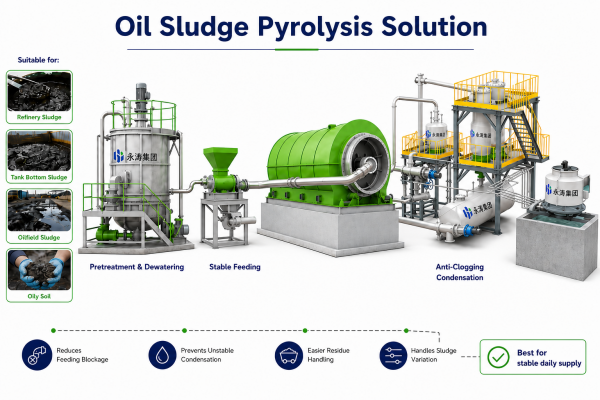
Suitable materials include refinery sludge, tank-bottom sludge, oilfield sludge, oily soil and selected drilling residues.

The supplier should confirm oil, water and solid proportions. Viscosity, salt, ash and hazardous characteristics also influence equipment selection.

Customized Modules Improve Operating Stability

For sludge that is viscous or unstable in nature, Yushunxin incorporates specialized designs for feeding, pre-treatment, condensation, anti-clogging mechanisms, and controlled slag discharge.

These configurations reduce feeding blockage, unstable condensation and difficult residue handling. They also give operators better control when sludge quality changes between batches.

Continuous treatment becomes more practical when the source remains stable and the project has a clear daily target.

Oil sludge disposal pyrolysis line

Can Laminated Solar Panels Enter Thermal Treatment?
Thermal Delamination Releases Bonded Materials

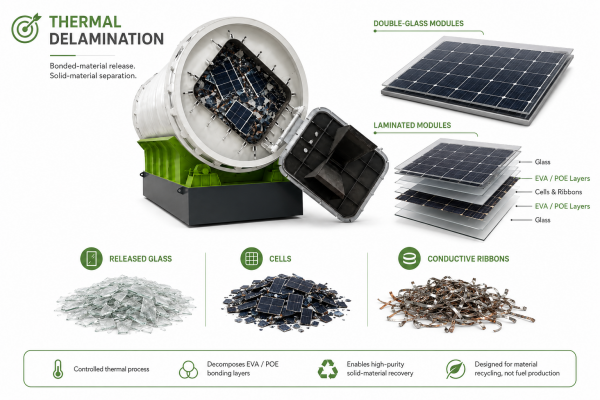
Solar panel thermal delamination focuses on material separation rather than fuel production.
Double-glass and laminated modules contain EVA or POE layers that bond glass, cells and conductive ribbons. Controlled thermal treatment decomposes these layers and releases the solid materials.

PV Module Thermal Separation Supports Recovery

After thermal delamination, downstream equipment can separate glass, silicon, copper ribbons, silver-rich fractions and aluminum components.
Yushunxin can connect frame removal, controlled thermal treatment, cooling, screening and physical separation into one PV recycling line. The route should match the module structure, breakage rate and target purity.

Its main purpose is thermal delamination and material recovery rather than fuel production.

Yushunxin customizes the process according to your feedstock, capacity and target products. We provide one-stop service from solution design to installation and training.