Which Pyrolysis Plant Fits Your Agricultural Plastic Collection Model?
Many agricultural projects do not need continuous plastic pyrolysis production line. Farms and cooperatives often face seasonal plastic accumulation after planting, harvesting, greenhouse replacement or irrigation system renewal.
A batch pyrolysis system suits this operating pattern because it can handle periodic feeding, changing material volumes and mixed agricultural plastic batches with lower pretreatment complexity.Yushunxin provides common batch pyrolysis capacities of 6 DPT, 8 DPT, 12 TPD and 15 DPT.
Semi-continuous pyrolysis equipment becomes practical when the feedstock supply is stable, well sorted, properly crushed and relatively dry.
Yushunxin offers 10 DPT, 15 TPD and 20 TPD semi-continuous options for regional agricultural plastic recycling centers and projects with higher daily processing demand.
Yushunxin first evaluates whether a batch system can meet the seasonal treatment target and oil recovery plan.
A semi-continuous configuration can serve as an upgrade when the customer already has mature collection, sorting, crushing and drying systems.
How Does a Medical Waste Pyrolysis Plant Create Value?
Agricultural plastic waste often contains soil, moisture, stones, metal clips, ropes, labels or mixed plastic pieces. Before entering the reactor, sorting, size reduction, impurity removal and basic moisture control can reduce feeding problems, improve heating uniformity and lower later maintenance pressure. For loose materials such as mulch film and greenhouse film, stable conveying or compact feeding may also be considered. This makes the pyrolysis plant easier to operate in real farm waste collection conditions.
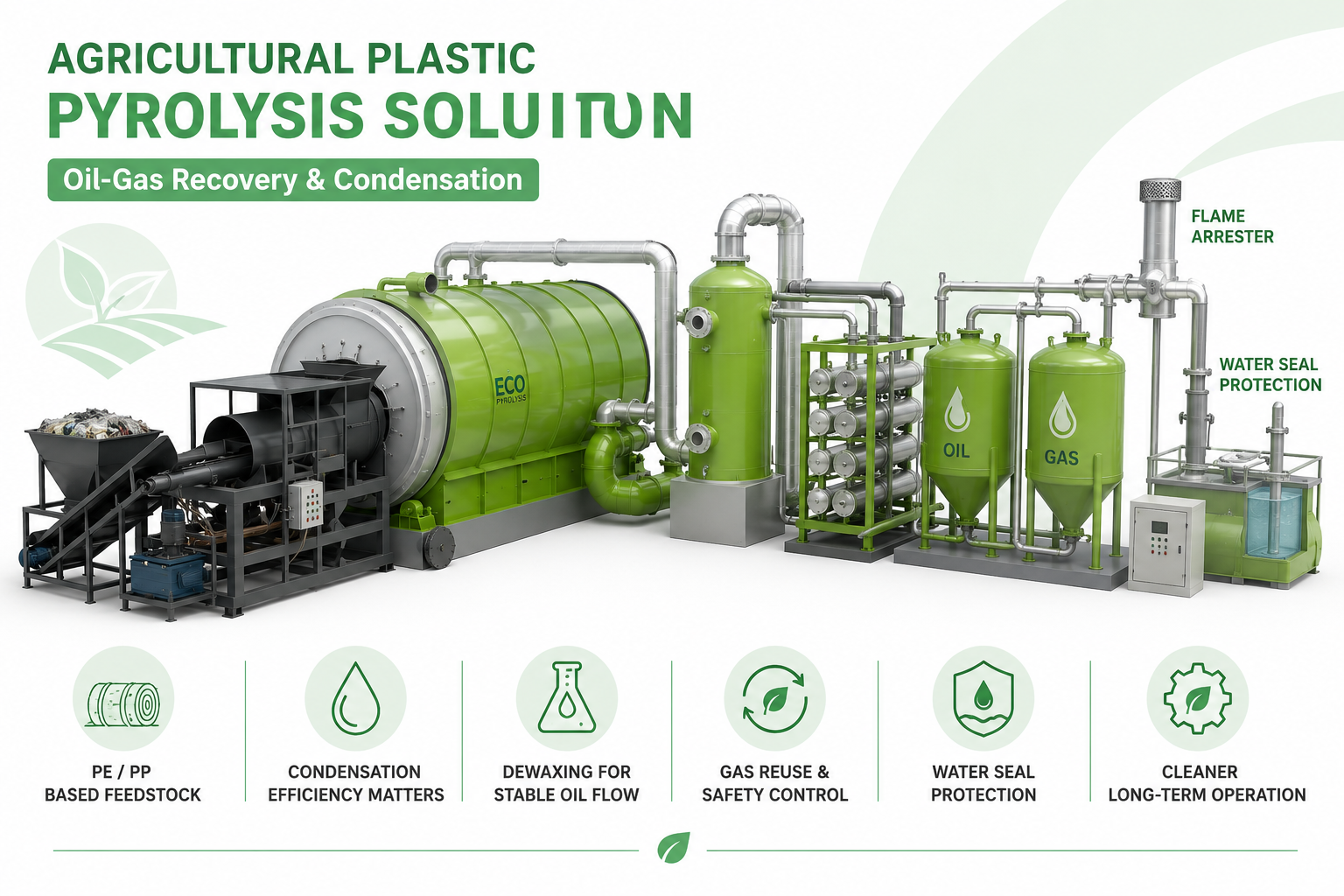
Agricultural plastics are commonly PE and PP based, so oil-gas recovery, condensation efficiency and wax control are important. If the condensation system is too simple, the project may face frequent pipe cleaning, unstable oil collection or reduced operating efficiency. A practical agricultural plastic waste pyrolysis plant for Farm Waste Management should consider oil-gas separation, suitable condensers, necessary dewaxing, gas reuse, water seal protection and flame arresting. These details directly affect fuel oil recovery, safety and long-term equipment cleanliness.
Farm plastic pyrolysis projects may operate near farms, rural recycling yards or industrial parks. Odor, smoke, dust and residue discharge therefore need to be controlled from the beginning, especially when the project is used for rural waste management. A better configuration should include safe gas use, tail gas purification, controlled residue cooling and cleaner discharge. These systems help the project gain higher acceptance from operators, nearby communities, regulators and investment partners.