

Aluminum Can Recycling Decoating and Melting Solution for Clean Aluminum Recovery
What Projects and Materials Are Suitable for This Aluminum Can Recycling Solution?
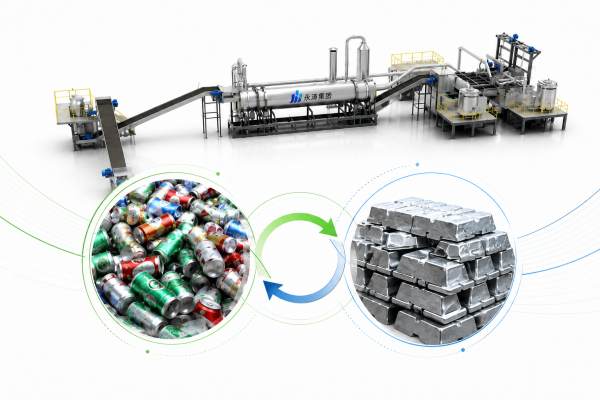
The aluminum can recycling decoating and melting Solution is a complete route for UBC recycling plants, secondary aluminum smelters, scrap aluminum processors and aluminum ingot producers. If your current material is entering the melting furnace with paint, ink, lacquer or inner coating, you may already face smoke, odor, slag, aluminum burning loss and higher environmental pressure. This solution helps you clean the aluminum before melting, so the following melting and casting process becomes more stable.
This line is mainly used for used beverage cans, including beer cans, soft drink cans, aluminum can bales and loose UBC scrap collected from recycling centers. For baled cans, Yushunxin usually recommends shredding first, because loose and uniform aluminum pieces can receive heat more evenly during decoating. After shredding, sorting and low-oxygen thermal treatment, paint and organic coatings are removed before the clean aluminum enters the melting furnace.
Besides aluminum cans, your plant may also process coated aluminum packaging, printed aluminum sheets, light painted aluminum scrap, aluminum pieces with oil residues, or materials with plastic film and lacquer. These materials can be evaluated for the same pretreatment route if their size, impurity level and coating condition are suitable. Before final configuration, you can share material photos, bale size, daily capacity, impurity condition and final product target with Yushunxin.

What Final Products Can You Get from the Line?

Clean aluminum scrap from paint removal furnace
- Sold to downstream smelters.
- Better melting performance and stronger negotiation value.

Aluminum Ingots paint removal furnace
- Molten aluminum cast into ingots at approximately 720°C.
- Easy to store, transport and sell.
- Suitable for secondary plants, alloy producers and trading companies.

Molten aluminum from aluminum melting furnace
- Produced at approximately 760°C for direct use.
- Connects directly with casting or forming processes.
- Reduces reheating cost and improves material turnover.
Why Does the Combined System Bring Better Project Value?
When you use a decoating furnace and melting furnace as one coordinated line, the energy flow becomes more efficient. The combustible gas generated during decoating can be collected and sent to the combustion system as supplementary heat. This reduces dependence on external fuel and supports a lower operating cost.
Clean aluminum also melts more smoothly. Since most organic coatings have already been removed, the melting furnace faces less smoke, less odor, less slag and less unnecessary heat loss. For your daily operation, this means fewer interruptions, easier furnace management and better control over product quality.
If your plant is facing stricter environmental inspection, direct melting of painted cans can create a high burden for the smoke treatment system. Yushunxin’s Aluminum Can Recycling Decoating and Melting Solution works in a sealed low-oxygen environment, and the exhaust can pass through dust removal, secondary combustion and tail gas treatment before discharge. The process does not require acid or alkali washing, so there is no chemical stripping wastewater.
For many recycling businesses, environmental cost is part of the real production cost. By treating coatings before melting, you can reduce smoke control pressure at the source and make the whole project easier to operate under local emission requirements.
If you have stable can supply, a continuous decoating and melting route can support long-hour operation. Yushunxin can configure continuous feeding, automatic temperature control, material conveying, carbon dust separation, melting, tail gas treatment and optional ingot casting equipment. This reduces manual handling and helps you plan daily capacity more accurately.
A smoother process is especially useful when your business grows from simple scrap collection to industrial recycling. You need stable output, predictable labor demand and controlled energy use. A properly designed line can help you reach those targets.
A clean aluminum surface improves melting quality and makes product upgrading easier. After melting and refining, your output can be used for aluminum ingots, alloy ingots, aluminum casting, rolling materials or can-grade recycling projects. If your buyers care about cleaner recycled aluminum, this pretreatment route gives you a stronger selling point.


