How to Select the Right Discharge System for a Pyrolysis Plant Project
Selecting the right discharge system starts with operating rhythm, feedstock form, labor conditions and site standards. Equipment price matters, but the discharge method also affects cooling time, carbon black handling, dust control and daily output.
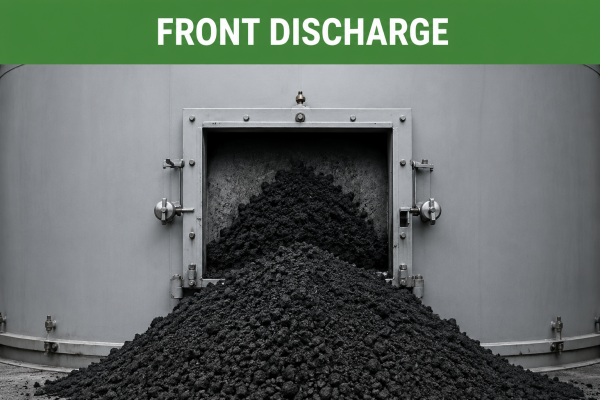
Batch projects may use front or rear discharge. Semi-continuous and fully continuous lines usually rely on rear discharge because the plant must remove hot residue without interrupting production.
What Affects Pyrolysis Plant Discharge System Selection?
- Batch pyrolysis machines stop after each cycle, allowing either discharge method.
- Semi-continuous pyrolysis plants shorten the interval between batches and need faster residue removal.
- Fully continuous system systems require continuous feeding, reaction and discharge.
The selected system should support the complete production rhythm rather than operate as an isolated accessory.
- Waste tires produce carbon black and steel wire.
- Plastic leaves residue that varies with resin type and contamination.
- Oil sludge may create heavier ash or sticky solids.
Residue temperature, particle size and flowability influence conveyor design, cooling demand and blockage risk. Yushunxin reviews these conditions before matching the discharge system.
|
Factor |
Front Discharge |
Rear Discharge |
|
Initial investment |
Lower |
Higher |
|
Cooling requirement |
Longer reactor cooling |
Supports hotter residue removal |
|
Labor demand |
Higher |
Lower |
|
Dust control |
More difficult |
Better sealed handling |
|
Turnaround |
Slower |
Faster |
|
Best fit |
Flexible batch projects |
Frequent batch or higher-efficiency projects |