

Solar Panel Recycling Trends: Mechanical, Batch or Continuous Thermal Delamination?
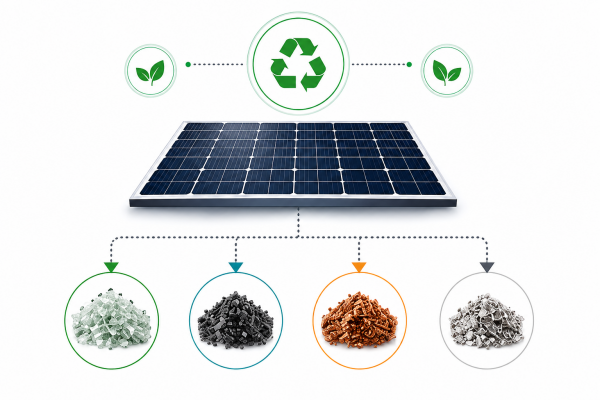
Route selection at a glance
Mechanical
processing
- Selected single-glass modules
- Lower breakage rate
- Higher material purity
Thermal
delamination
- Double-glass / mixed PV
- Strongly bonded structure
- Enables higher recovery
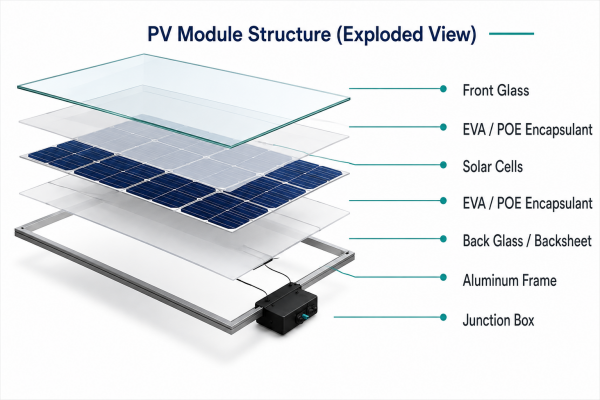
Why Is Thermal Delamination Becoming More Relevant?
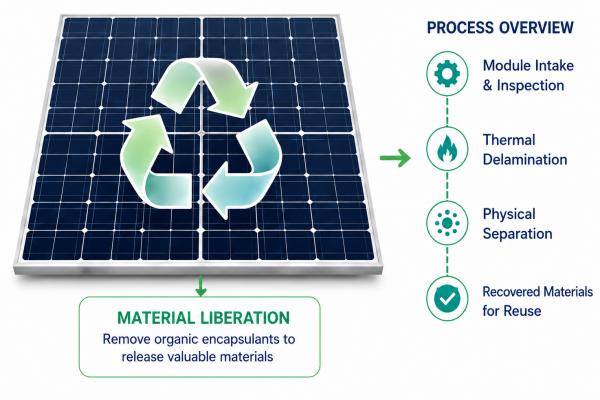
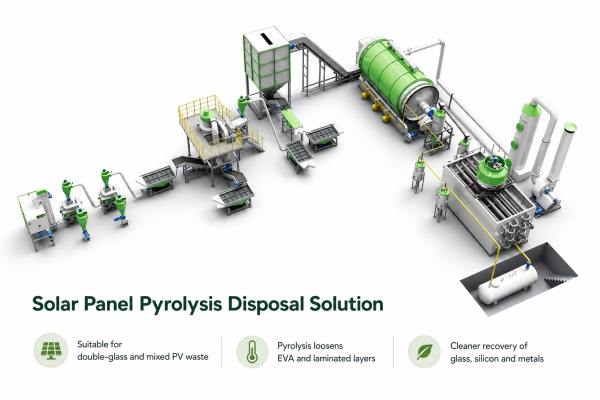
How Should You Choose the Right PV Recycling Route?
For most investors, furnace size should not be the first decision. The first step is to determine whether the actual module mix and recovered-product target justify mechanical separation, batch thermal treatment or continuous thermal delamination.
|
Project Condition |
Preferred Direction |
Why |
Main Trade-Off |
|
Stable single-glass stream |
Mechanical route first |
Lower thermal demand and simpler separation |
May be less suitable for strongly bonded or mixed modules |
|
Variable mixed PV waste |
Batch thermal evaluation |
Flexible for changing module structures |
Lower utilization and longer operating cycle |
|
High double-glass share |
Thermal delamination evaluation |
Helps release strongly bonded layers |
Higher heat and off-gas requirements |
|
Stable large-volume feed |
Continuous tunnel route |
Better automation and material-flow integration |
Higher investment and feed consistency requirement |
|
Higher-purity silicon / silver-bearing concentrate target |
Route-specific liberation + refined separation |
Stronger liberation where product specifications justify it |
Higher separation complexity and tighter quality control |
Thermal delamination should therefore be selected only where the module structure and recovered-material specifications justify the additional heat demand, off-gas treatment and capital investment.
Select the process route first, then size the capacity within that route—not the other way around.
Start With Your Real Module Mix
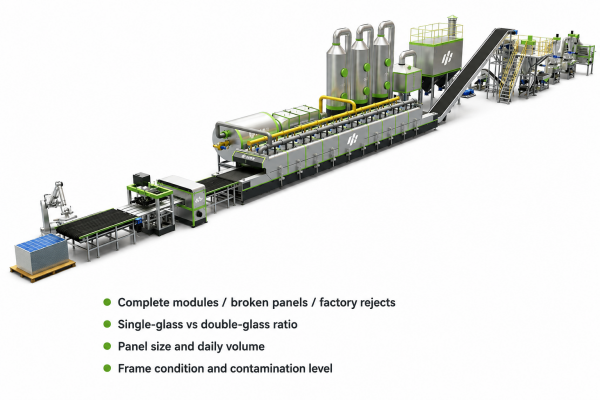
Before comparing equipment quotations, define the material that will actually enter the plant:
These conditions determine whether the project can operate with a relatively stable mechanical route or whether additional thermal flexibility is required.
A nominal annual feed volume alone is not sufficient. A plant receiving 10,000 tonnes of relatively uniform single-glass modules presents a different engineering problem from one receiving the same tonnage as irregular batches of damaged, double-glass and mixed-generation panels.
Judge the Route by Downstream Product Specifications
Recovered material creates value only when it reaches a specification that downstream users can actually accept.
Glass
Evaluate according to purity, organic residue and contamination.
Silicon &
Silver-bearing
Fractions
Assess against downstream concentration or refining requirements.
Conductive
Metal Fractions
Evaluate according to the required separation depth.
Overall Fit
Match the liberated material quality with the end-use specification.
If the target market requires cleaner or more concentrated material, downstream separation can become just as important as the thermal section itself.
This is also why a higher-value silicon or silver target does not automatically mean that every project requires thermal treatment. The correct liberation route depends on module structure, while the required separation depth depends on the specification of the recovered product.
A successful PV recycling project requires more than selecting a furnace. The pretreatment, material-liberation route, off-gas control, cooling and downstream separation must be designed around the same feedstock and recovered-product targets. From initial route selection to project implementation, the goal is to build a recycling line that matches your real feedstock, operating conditions and downstream material requirements, please feel free to contact Yushunxin for Solar pannel recycling solution.


