Oil Sludge Pyrolysis Solution for Refinery and Petroleum Waste Treatment Projects

Volume
Reduction
Oil
Recovery
Stable
Operation
Environmental
Compliance
Why Do Petroleum Projects Need a Sludge Pyrolysis Treatment?
What Should Be Evaluated Before System Design?
What Should Be Confirmed Before Plant Design?
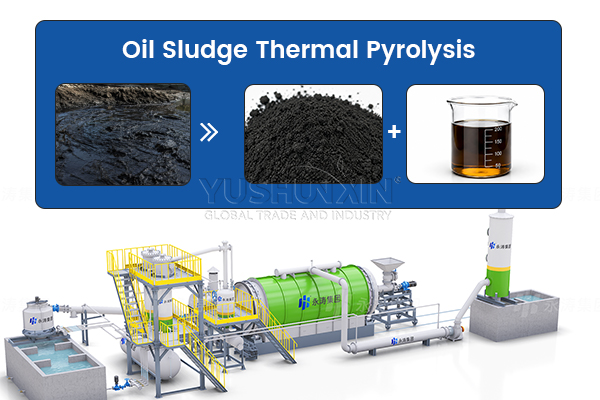
Prepared oil sludge enters the reactor and undergoes thermal treatment under oxygen-limited conditions. Oil vapor and non-condensable gas leave the material, while sand, ash and other solids remain in the residue.
The oil vapor then enters the separation and condensation system. After cooling, condensable fractions become recovered oil.
Part of the non-condensable gas still contains useful energy. After purification and safety treatment, the burner system can reuse it as auxiliary fuel.
External fuel remains necessary during startup or when gas production is insufficient. Actual savings depend on oil content, moisture and operating conditions.
The system cools and discharges the remaining solids after pyrolysis. Their final use or disposal depends on composition and local regulations.
This integrated process combines:
· Sludge-volume reduction
· Hydrocarbon recovery
· Controlled gas treatment
· More organized residue management
Sludge Collection
& Testing
Pretreatment /
Conditioning
Controlled
Feeding
Pyrolysis
Reaction
Oil–Gas
Separation
Condensation
Recovered Oil
Collection
Gas Treatment
or Reuse
Residue
Discharge
Tail Gas
Treatment
Which Configuration Fits the Project Model?