Oil Sludge Pyrolysis Solution for Refinery and Petroleum Waste Treatment Projects

An oil sludge pyrolysis solution helps refineries, tank-cleaning contractors, oilfield service companies and waste-treatment operators manage oily residues more systematically.

Oil sludge can occupy storage space, increase disposal costs and create odor, safety and compliance pressure. A suitable sludge pyrolysis route reduces sludge volume, recovers usable oil fractions and organizes residue handling around actual site conditions.

Oil sludge disposal pyrolysis plant

Volume
Reduction

Oil
Recovery

Stable
Operation

Environmental
Compliance

Why Do Petroleum Projects Need a Sludge Pyrolysis Treatment?

Storage and Disposal Pressure

  • Takes up storage space
  • Increases disposal cost
  • Creates odor and safety concerns
  • Brings compliance pressure

Recover Value from Waste

  • Reduce outsourcing dependence
  • Recover part of hydrocarbon value
  • Improve operating profit
  • Build a controllable system

Different Business Models

  • Refinery: site compliance & waste reduction
  • Tank cleaning companies: project capacity
  • Waste oil recyclers: oil quality & sales

What Should Be Evaluated Before System Design?

Sludge Source Defines the Route

Check sludge source, photos, videos, moisture content, oil content, solid content and test reports.

Moisture & Viscosity Shape Operation

High moisture and high viscosity affect feeding, heating, fuel consumption and operating cost.

Coking Risk Needs Early Response

Heavy oil components may cause coking, reduce heat transfer and increase cleaning frequency.

Key Data to Confirm

Moisture, oil content, ash content, viscosity, impurities, capacité journalière, site conditions and compliance requirements.

What Should Be Confirmed Before Plant Design?

1

Sludge Collection
& Testing

2

Pretreatment /
Conditioning

3

Controlled
Feeding

4

Pyrolysis
Reaction

5

Oil–Gas
Separation

6

Condensation

7

Recovered Oil
Collection

8

Gas Treatment
or Reuse

9

Residue
Discharge

10

Tail Gas
Treatment

The process can be customized according to sludge condition, site layout, environmental requirement and target capacity.

Which Configuration Fits the Project Model?
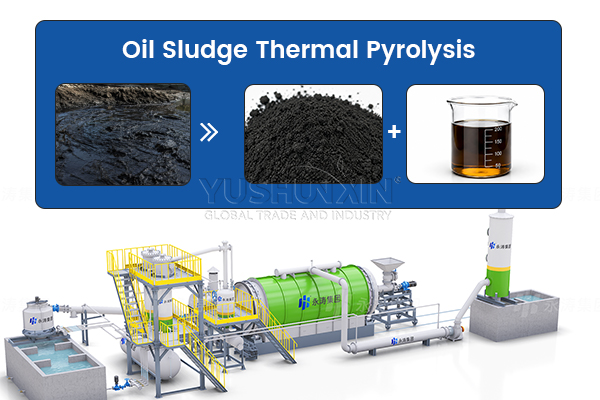
Oil sludge pyrolysis solution for refinery

Capacity Should Follow Sludge Generation

Some customers need to clear years of accumulated sludge. Others receive regular material from refinery maintenance or tank-cleaning contracts.

A cleanup project may prioritize faster treatment and short project turnover. Long-term operators usually need easier maintenance, stable output and predictable processing cost. Yushunxin designed 1-50TPD sludge disposal pyrolysis machine.

Environmental Systems Support Approval

Oil sludge treatment requires more than a reactor. The project may need odor control, oil-gas separation, water seals, flame protection, tail-gas purification and safe residue discharge.

Environmental equipment should form part of the initial design rather than an optional upgrade.

Refinery sludge pyrolysis solution project
Pyrolyzable oily sludge

Site Layout Influences Daily Management

A workable layout should include space for:
· Raw sludge storage
· Pretreatment and feeding
· Recovered oil tanks
· Fuel and cooling systems
· Residue handling
· Vehicle and maintenance access
Clear material routes reduce unnecessary transfer and improve site safety.

Share your sludge source, available analysis, expected capacity, site photos and local compliance requirements. Yushunxin will help you evaluate an Oil Sludge Pyrolysis Solution suited to your refinery or petroleum waste treatment project.