

Pourquoi la pyrolyse du plastique a-t-elle besoin d'un système de déparaffinage?
A plastic pyrolysis dewaxing system controls heavy wax before it reaches the main condenser. This matters because PE, PP, plastic film, woven bags, packaging waste and mixed polyolefins contain long-chain hydrocarbons.
During pyrolysis, some hydrocarbons become light oil vapor, while others remain as heavier wax. PE-rich feedstock usually creates the greatest wax risk. Temperature control, vapor residence time and condensation design also affect wax formation.
Without suitable control, wax can restrict oil flow, increase cleaning demand and interrupt production.
What Happens When Wax Enters the Condensation System?
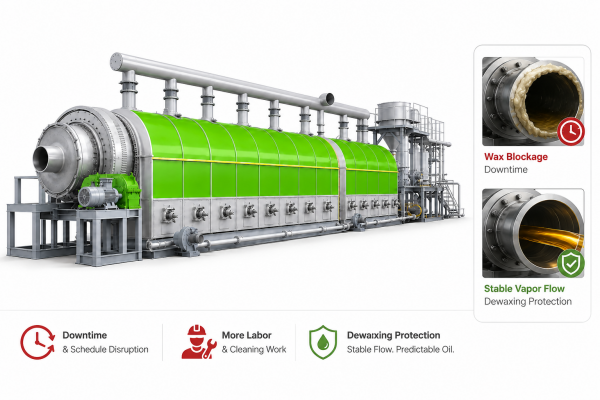
As wax-rich vapor cools, it may stick to the inner walls of pipes, condenser tubes and oil collection sections. Early signs include slower oil flow, thicker recovered oil and rising system pressure.
Repeated buildup narrows the vapor path and reduces condensation efficiency. Severe blockage may force operators to stop the plant and clean the system before restarting.
Wax blockage creates more than a maintenance problem. It extends downtime, increases labor demand and disrupts the production schedule.
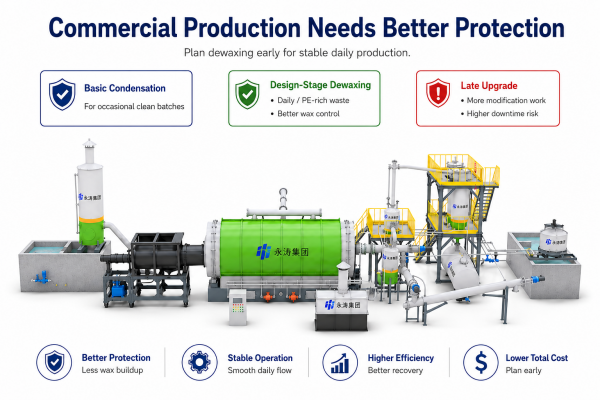
A commercial plastic pyrolysis plant needs stable vapor flow and predictable oil collection. Dewaxing helps protect both.

Which Plastic Feedstocks Need Dewaxing Most?

Does Dewaxing Only Prevent Blockage?
Recovered oil with excessive wax may thicken at lower temperatures. This makes storage, pumping and burner feeding more difficult.
Reducing heavy wax improves oil flowability and simplifies transfer between storage tanks.
Some buyers accept crude pyrolysis oil with a higher wax content. Other markets require better flowability before the oil enters industrial combustion, refining or further treatment.
The intended oil application therefore affects the dewaxing design. A basic plastic pyrolysis system may suit less demanding uses, while stricter downstream requirements may justify stronger wax separation.


