

Plastic Recycling Pyrolysis Solution for Fuel Oil Recovery
A plastic recycling pyrolysis solution converts suitable low-value plastic waste into recoverable fuel oil.
Reduce
Disposal Pressure
Recover
Fuel Value
Improve
Waste Utilization
Support
Long-Term Profit

Why Do Plastic Recycling Businesses Need a Pyrolysis-Based Recovery

What Affects Fuel Oil Recovery Performance?
Condensation and wax control are critical in plastic pyrolysis
Plastic pyrolysis projects can generate wax-rich oil vapor. If the condensation route is too narrow or the wax handling design is weak, the system may face blockage, unstable oil collection and higher cleaning workload.
Yushunxin can match the condensation system, dewaxing configuration, gas safety protection and residue discharge method according to the customer’s plastic composition and operating target, which makes the project easier to run after installation


Material composition decides the process difficulty
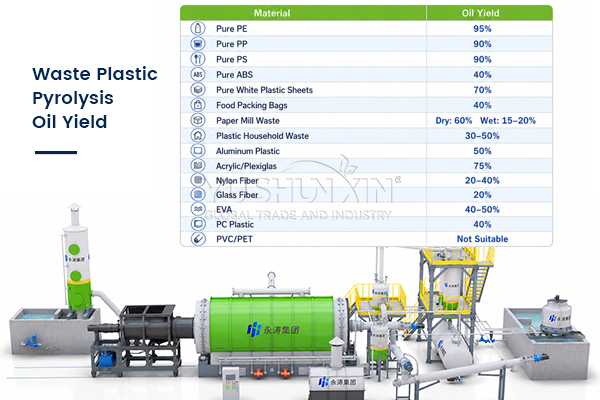
A practical project should begin with a realistic review of the plastic stream. Customers need to confirm whether the main materials are PE, PP, PS, ABS or other plastics, and whether the stream contains PVC, PET, metal, sand, water, labels or organic contamination. PE, PP, PS, ABS streams usually offer stronger fuel oil recovery potential. ABS may be workable, but the pyreolysis process should be evaluated according to its formulation and additives. PET usually has limited fuel oil recovery value and is not the preferred plastic for plastic-to-oil projects. PVC should be strictly controlled because chlorine content may increase corrosion risk, affect oil quality and raise exhaust treatment requirements.
|
Plastic Type |
Pyrolysis Suitability |
Oil Yield Potential |
|
PP |
High |
High |
|
PE |
High |
High |
|
PS |
High |
High |
|
ABS |
Medium |
Medium |
|
PET |
Low |
Low / Limited |
|
PVC |
Low |
Not recommended as main feedstock |
These details affect feeding design, oil quality, wax control, condensation efficiency, emission treatment and maintenance frequency.
How Should You Evaluate the Project Before Investment?
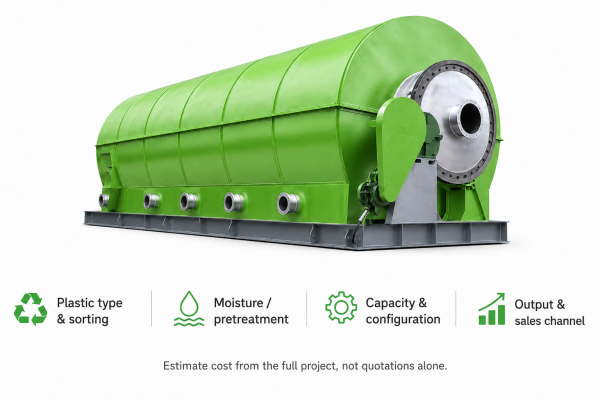
A workable Plastic recycling pyrolysis solution for Fuel Oil Recovery should balance oil yield, product acceptance, operating cost, environmental requirements and daily management. Customers should confirm expected capacity, plastic type, moisture level, PVC or PET proportion, current waste cost, target oil use, available fuel, power supply, site space and local emission rules. Once these conditions are clear, the proposal can better support investment comparison, plant layout and approval communication.


